How to Find a Water Leak
The quickest answer to how to find a water leak is your own water meter: switch off everything that draws water, read the meter, give it an hour, then read it again. Movement in the numbers means water is running somewhere it shouldn't. This guide walks through the meter test, the yard checks and the indoor hunt before anyone gets called.
If we're late, $100 comes off your bill

- Licensed and InsuredEvery job done by a licensed plumber. QBCC No: 15024607
- Fixed Quote FirstFlat-rate pricing, agreed before any work starts
- Lifetime Labour WarrantyBacked by our Fix-It-or-It's-Free guarantee (T&Cs apply)
- $0 Call-Out FeesNo extra charge for nights, weekends or public holidays

Bray Park sits on reactive clay and alluvial soil beside Four Mile Creek, and that ground swells in the storm season and shrinks through the dry winter, working buried pipe joints loose over the decades.
Most homes here went up between the 1970s and the 1990s, so plenty of supply lines are well into their second or third decade of service. Our licensed plumbers cover Bray Park and the streets around it, tracing these leaks every week.
A bill that climbs though nothing has changed at home is usually the first clue. The meter check below separates a leak from ordinary use, and it costs nothing but an hour.
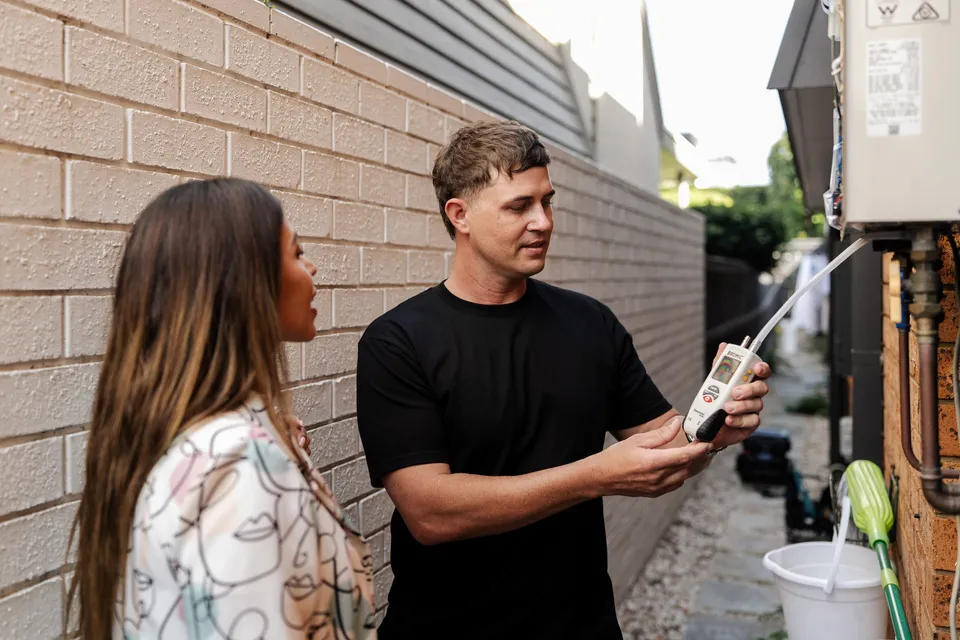
Does Your Meter Move With Everything Off
With every outlet shut down, note the meter reading, leave everything alone for at least one hour, then check the numbers again. Any movement means a leak somewhere on your side of the boundary.
Your meter lives in a small box level with the ground near the front boundary, on the road side. Leave the meter's own control tap on while you test, because the point is to see whether water still runs through it.
Before you start, shut down every draw on the property:
- every tap inside and out, including the hose
- the washing machine and dishwasher
- the fridge water line
- any irrigation or watering system
Photograph the numbers on the meter face, red digits included, so you have an exact starting point. Come back after the hour and compare. If the reading or the dial has moved, water is slipping out somewhere.
One thing worth knowing: Unitywater runs a program that flags unusually high use and gets in touch with households where possible, but the utility says customers shouldn't rely on that alone. Reading your own meter is the dependable early warning.
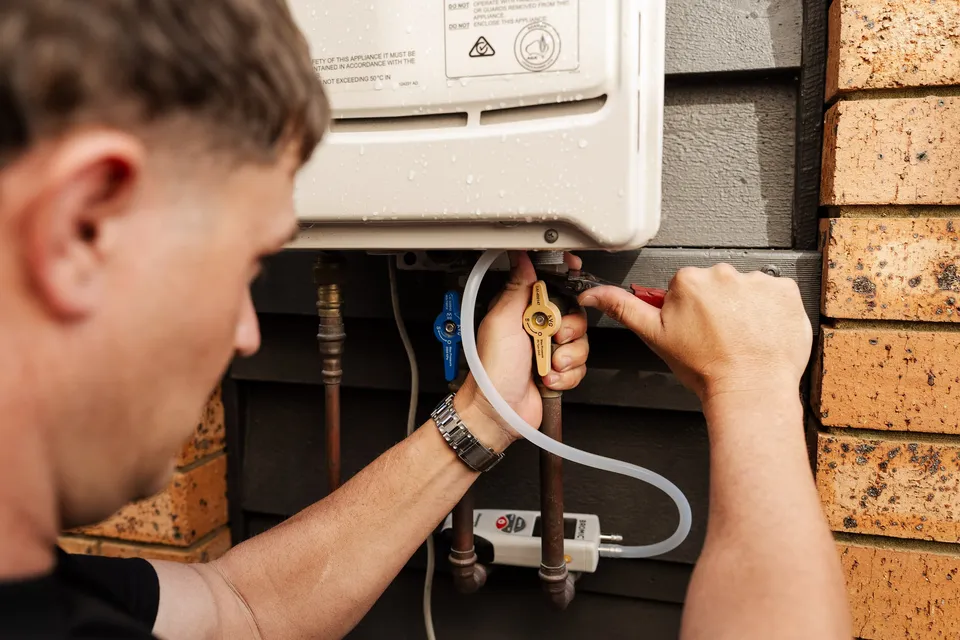
Where Water Hides in the Yard
Outdoors, work through three checks: each outside tap and where the hose screws on, the rainwater tank if there is one, and the ground itself.
Outside taps and hose fittings
run a finger under the spout and the fitting. A slow drip at an outside tap wastes a surprising volume across a season, and a worn hose washer is often the whole story.
The rainwater tank
if the tank connects to town water, check that it isn't refilling itself from the town supply. A failed solenoid or worn internal part can keep trickling drinking water in, and a licensed plumber tests and swaps that part.
The ground
soggy patches, a lawn patch that stays greener than the rest, spongy footing and paving that has shifted all point to a buried leak.
On the flat creek terrace here, that green patch can be hard to judge after a wet spell, because storm runoff drains slowly off the low blocks. Compare the suspect patch with the rest of the yard a few days after rain stops.
If a pool is in the picture, the bucket test settles it. Fill a bucket with water from the pool and set it on a step so it matches the pool level. Mark the level on the bucket and the pool, wait a day without swimming, then compare.
If the pool falls further than the bucket, that points to a leak; matching drops are evaporation.
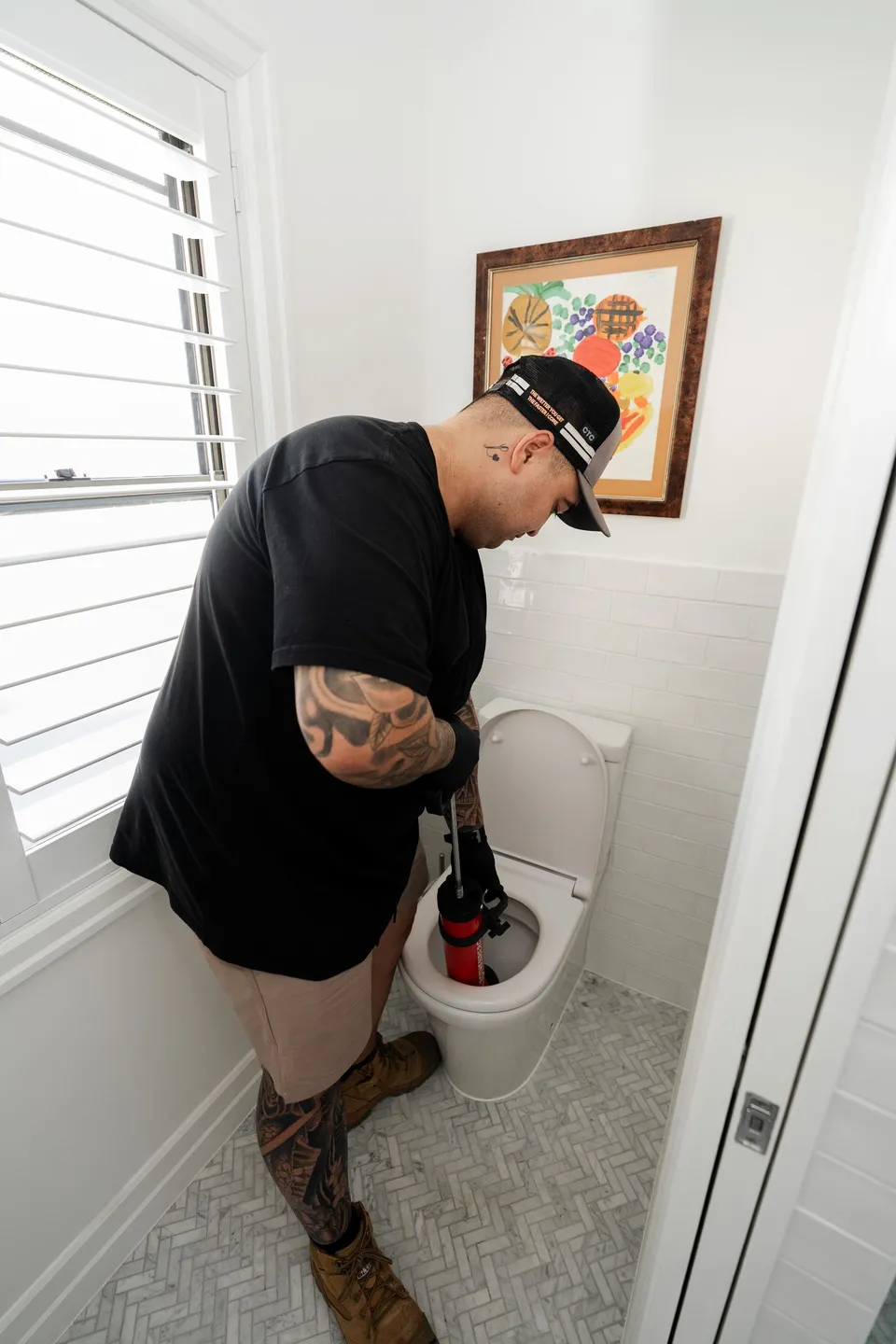
The Toilet Dye Test and Other Quick Checks
Indoors, hunt in this order: the toilet cistern first, then every tap and shower, then connected appliances, then walls, ceilings and floors for damp, stains or a musty smell.
The cistern comes first because it's the most common culprit. Add some food colouring to the cistern, don't flush, and give the dye time to sit. Colour reaching the bowl tells you the cistern is losing water past its seals, so flush afterwards to clear it, since the dye rinses away without marking ceramic.
Then check the rest:
- every tap and shower closed properly, with no drips
- the fridge water line and the hot water unit for water around their connections
- walls and ceilings for damp patches or stains
- finishes that swell or peel, a musty odour, and one warm spot on the floor
The QBCC allows a capable owner to swap a tap's jumper valve or washer, or cistern washers and similar rubbers. Replacing a whole tap, or repairing any pipe, is a licensed plumber's job.
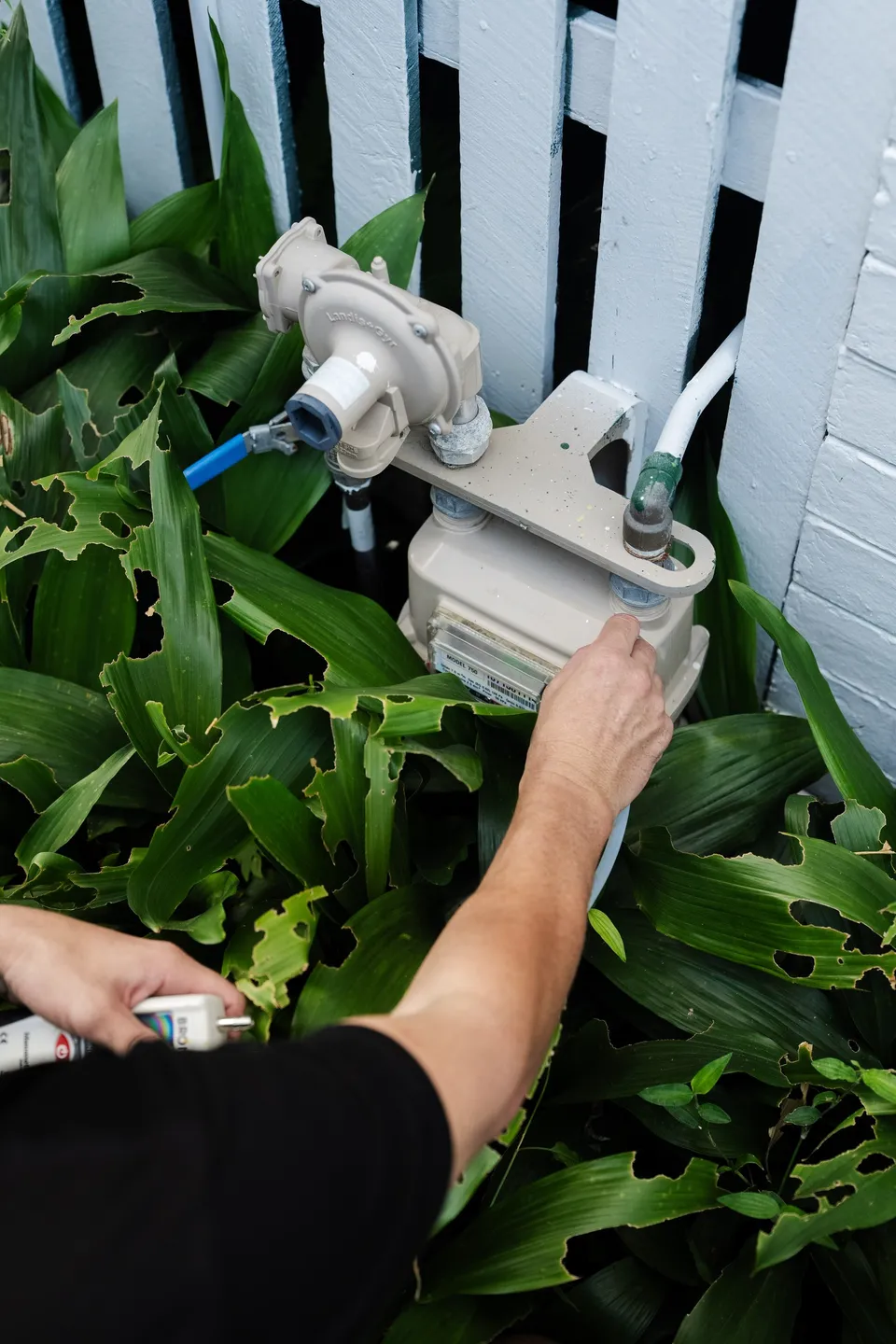
Meter Moving but Nothing Found
If the hunt turns up a dripping fixture, you have your answer. If the meter still creeps after every check comes back clean, the leak is concealed: buried in the yard, under paving or behind a wall.
A concealed leak of that kind can waste an enormous volume of water a day and stay hidden until a hefty account or damaged plaster shows up. Queensland law classes repairing a broken pipe as minor work: a licence holder must do it, and neither a permit nor a Form 4 is needed.
Every pipe past the meter, on your land, is yours to maintain. Unitywater looks after the mains and sewers beyond your boundary, and everything on the property side of the meter is the owner's responsibility, including the losses from a leak there.
When to Call a Plumber
Ring a licensed plumber once the meter keeps moving after your checks, or straight away if damp is spreading inside a wall or a ceiling stain is growing. Both point to water escaping where you can't reach it.
Our leak detection in Bray Park page covers how we isolate sections, pressure test and listen along the pipe run to pin a concealed leak down. Whether insurance helps with the damage depends on the policy, so the faster the fix, the better that conversation goes.
Hidden Leak Questions From Bray Park
Call (07) 3524 7163How long should the meter test take?
Give the test a full hour at minimum, with nothing drawing water anywhere on the property. Unitywater, the utility across Moreton Bay, sets that minimum, and a shorter window can miss a slow leak. Read the meter before and after, red digits included.
How do I run a toilet dye test?
Put a dash of food colouring in the cistern and don't flush. Wait, then check the bowl, because any colour in the bowl means the seals are leaking. Flush afterwards, as the dye rinses out of ceramic without marking it.
What if my meter moves but I can't find anything?
The leak is probably concealed, buried in the ground, under paving or inside a wall. A licensed plumber investigates from there, isolating sections and pressure testing the line. The leak detection page walks through the methods and the utility's adjustment rules.
Will Unitywater reduce my bill for a hidden leak?
Yes, Unitywater may reduce the bill under its concealed leak rules. The leak must be hidden from view, past the meter on your land, repaired in time and backed by a licensed plumber's invoice. Leaking taps and running cisterns don't qualify, and the leak detection page sets out the full conditions.

Call Us About the Meter That Won't StopWe'll call you back.
Ring (07) 3524 7163 and tell us what's wrong. You get $0 call-out fees, a fixed quote before any work starts and same-day where we can, 7 days a week.
To claim your $0 call-out fee, call (07) 3524 7163 today.